Bacon can go from pale and floppy to bitter and burnt in less time than it takes to pour a cup of coffee.
To find the most reliable cooking method, I tested slices from the same package three ways: in a skillet, in the oven, and in an air fryer. I compared cooking time, texture, cleanup, batch size, and how easy it was to stop the bacon at exactly the right level of crispness.
Table of Contents
The winner depends on what you need. The stovetop gives you the most control, the oven is easiest for a full package, and the air fryer is fast—but far less forgiving.
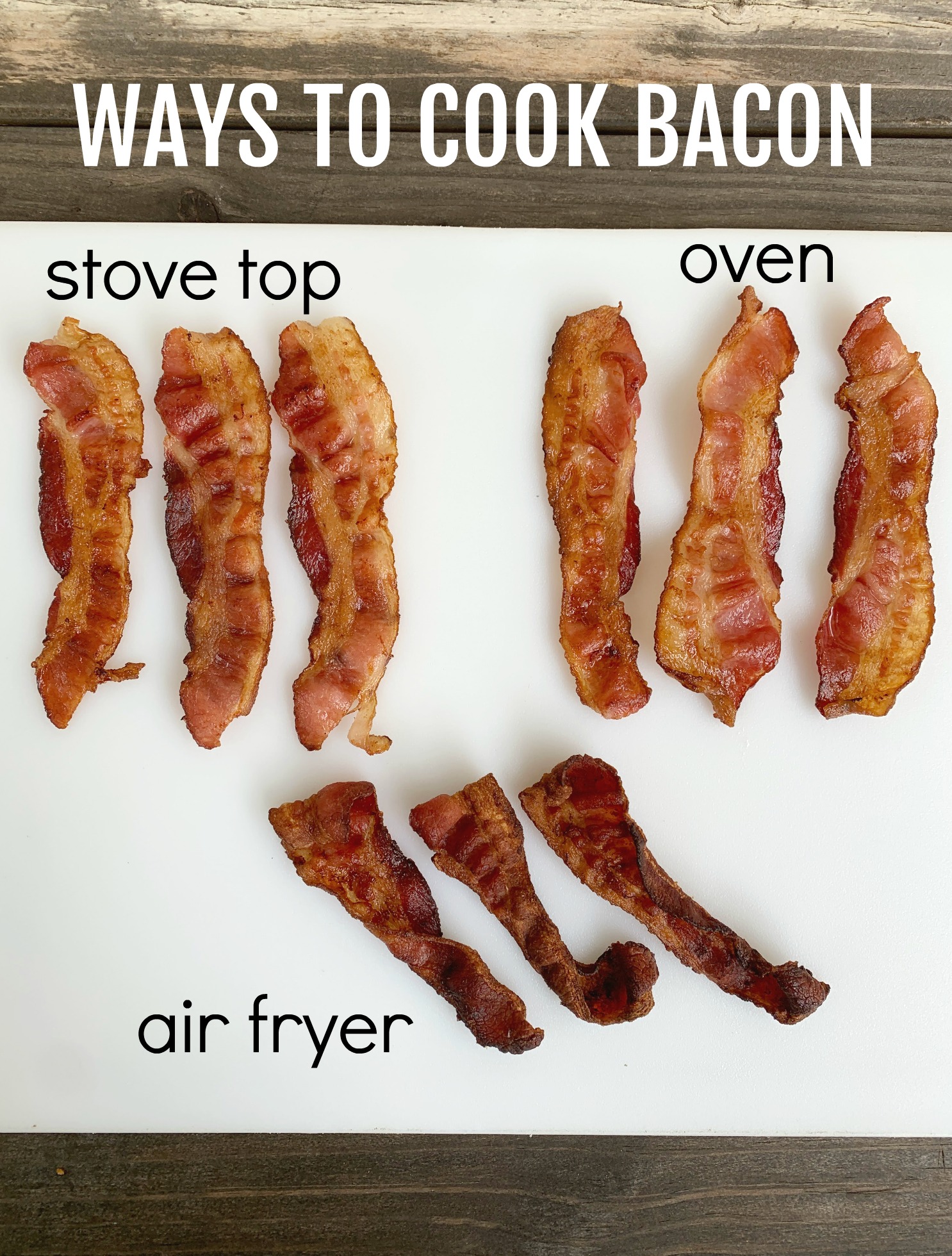
Use the quick comparison chart below to choose your method, then follow the tested instructions for bacon that comes out chewy, crisp-chewy, or satisfyingly crunchy instead of scorched.
| Method | Temperature | Approximate time | Best for | Capacity | Attention required |
|---|---|---|---|---|---|
| Stovetop | Medium-low | 10–15 minutes | Maximum texture control | Small batch | High |
| Oven | 400°F | 12–20 minutes, depending on thickness | Large batches | High | Low |
| Air fryer | Begin around 350°F | Check from 6–8 minutes | A few fast slices | Low | Medium |
Have You Cooked Bacon Before?
No shame if you haven’t! Bacon is one of those foods that seems simple until you’re standing over a pan, wondering if it’s done, why it’s curling, or how it went from chewy to burnt so fast.
Want our human-written content to rank above AI-generated garbage? Help us out by clicking this button!
The good news is that cooking bacon is an easy skill to learn. You just need to know that not all bacon cooks exactly the same way.
Different brands can vary in fat content, thickness, sodium, and added sugar. Most pork bacon has plenty of fat, but some slices are meatier while others are fattier. Bacon with added sugar, such as maple or brown sugar bacon, may brown faster and can burn more easily if the heat is too high.
You may also see options like low-sodium, uncured, thick-cut, center-cut, or turkey bacon. For this test, I used regular pork bacon from the same package for all three cooking methods. That kept the thickness, salt level, sugar content, and fat content as consistent as possible.
In other words, this comparison is based on ordinary pork bacon cooked three different ways: on the stovetop, in the oven, and in the air fryer.
Doneness Levels for Bacon
Bacon is a type of pork that is typically cured and then smoked. It can be eaten on its own or used as a flavor enhancer in various dishes. The level of doneness refers to how well-cooked the bacon is. Each level has its own distinct taste and texture.
Personally, I like to aim for “chewy” or “crisp-chewy” for most things.
Avoid heavily charred bacon. Cooking meat at very high temperatures can form compounds called HCAs and PAHs, although the size of the associated cancer risk in humans remains uncertain.
Quick Comparison Chart of Doneness Levels
| Doneness Level | Appearance | Texture | What It Feels Like | Best For |
|---|---|---|---|---|
| Chewy | Mostly browned with rendered fat, but not deeply crisp | Tender with some bite | Flexible but no longer limp | Breakfast plates, sandwiches, burgers |
| Crisp-Chewy | Evenly browned with golden edges | Firm with a slight chew in the center | Holds its shape well, but still has a little give | A good middle ground for most recipes |
| Crispy | Deep golden brown to medium brown | Crunchy and brittle | Snaps easily when lifted or broken | Crumbling over salads, baked potatoes, soups, or for people who love crisp bacon |
| Extra Crispy / Well-Done | Dark brown with very pronounced crisp edges | Very brittle and dry | Breaks apart easily | Bacon bits, toppings, or extra-crisp texture lovers |
| Burnt / Overcooked | Very dark brown to black in spots | Hard, dry, and sometimes bitter | Shatters easily and tastes scorched | Best avoided |
Frying Bacon on the Stove
Since this is where my comfort zone is, I thought I would start here, the classic stovetop awesome bacon method.
Tools I Used
I only needed a few tools to cook the bacon this way.
- A bacon fork to flip the bacon, and then remove it from the skillet when it is done.
- A deep-sided skillet can help reduce splattering grease, though I haven’t really found a way to completely eliminate the splatter short of putting a clear lid over it in between flipping the bacon.
- A plate with paper towels will give you something to put the bacon on when it’s done. I like to have this ready before I start cooking the bacon.
- An apron is handy because it is easy to get grease splattered on yourself if you’re not careful. I like this apron because it has pockets.
Step-by-Step Process for Pan-Frying Bacon
Here’s the step-by-step process I used to cook bacon on the stove and control the crispiness as it cooked.
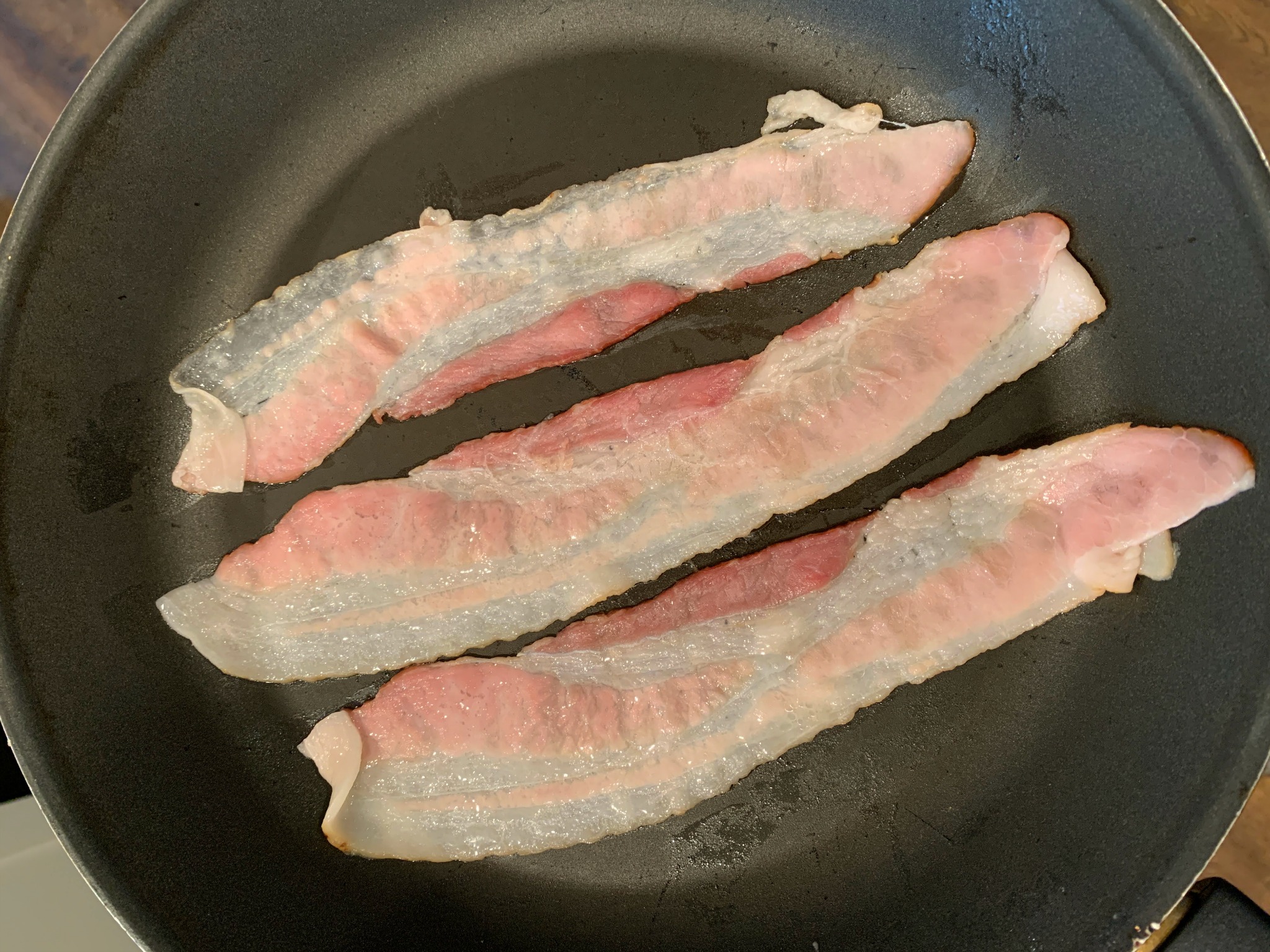
Step One: Place Bacon in Cold Pan
The best way to cook bacon in a frying pan is low and slow. I always place my bacon in a cold pan, rather than a pre-heated pan.
Step Two: Turn Burner to Medium-Low Heat
I turn my burner to medium-low for better control over the cooking process. Yes, it does take patience to cook it at this low heat, but it’s worth the wait for more even cooking and perfectly done bacon!
Step Three: Flip Bacon as Necessary
The trick, of course, is to keep the slices from curling in the pan. As soon as the fat starts to render, I’ll usually flip them for the first time. This seems to help reduce the curling at the ends for more even cooking.
Then, when it starts getting done on the bottom side and sizzling nicely on top, I’ll flip it again for more even cooking.
Step Four: Remove Bacon When Close to Your Preferred Doneness Level
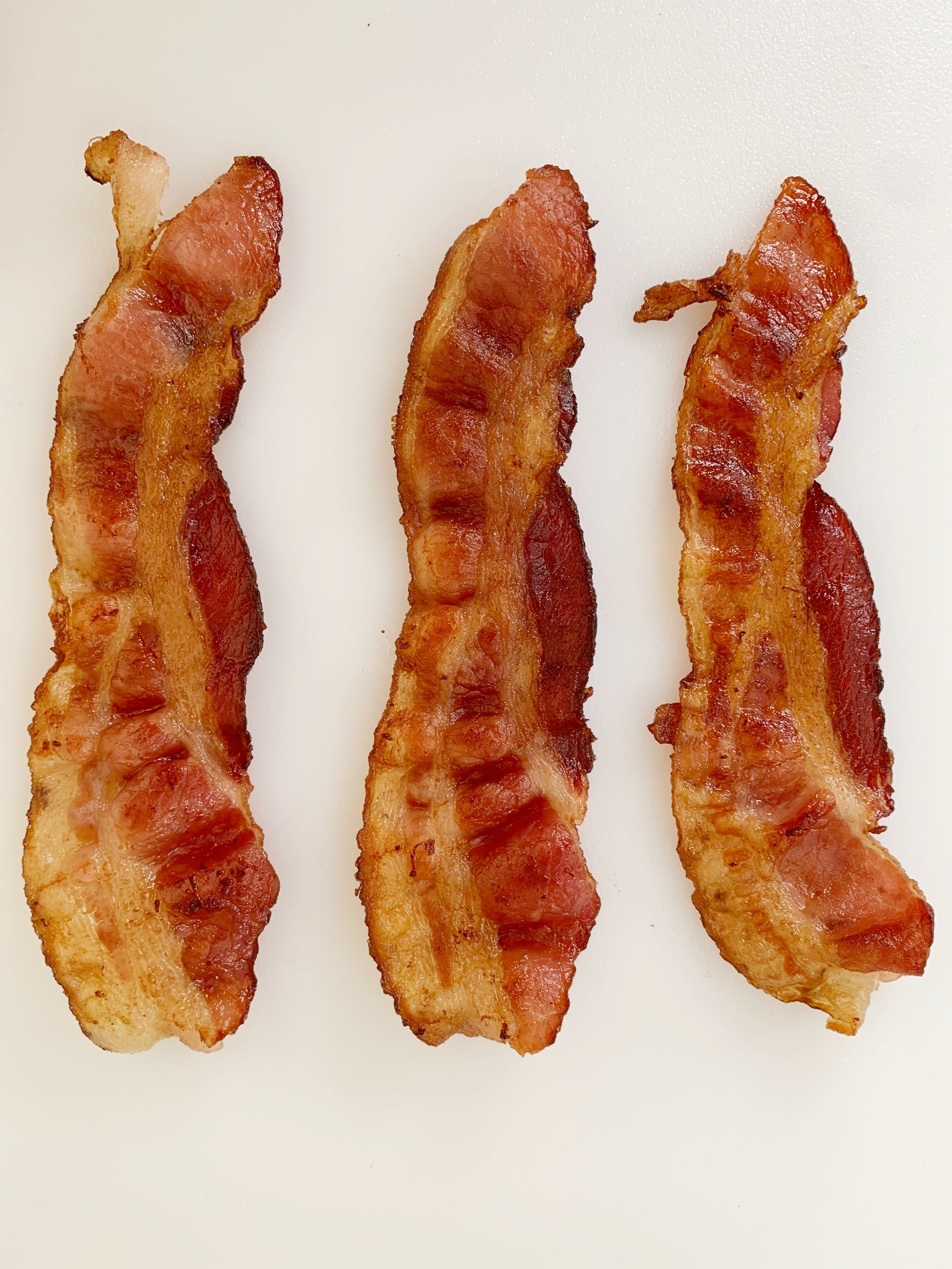
When the bacon is just shy of done cooking to my preference, I remove it from the heat and transfer it to the plate. It will continue sizzling for a few more seconds. It’s actually cooking a little bit more while it sizzles, which brings it up to my preferred doneness.
Pros:
- Only took about 10-15 minutes
- Since I can watch it the whole time, I can control when it’s ready to be pulled off. Sometimes there’s a fine line with bacon between needing more time and being too well done, and a frying pan lets you eye that up the easiest.
- This is also the only method that would allow you to cut your bacon into smaller pieces and fry them up that way. I do this frequently, so this is something I keep in mind.
- The end product was perfectly crispy, but not too well done.
Cons:
- It makes the biggest mess out of all 3 methods. There are bacon grease splatters everywhere, and you really do need to wear an apron.
- It needs more attention than the other methods. I flip my bacon a few times when it’s on the stove, whereas in the other two methods, I only flip once.
- You can only fit a small amount of bacon at a time, so you need to cook it in stages.
- This method comes with the greatest risk of a grease burn. I’ve been splattered with hot bacon grease enough times to confirm that it can hurt. See below for what to do if you get burned by bacon grease.
Safety Note: What To Do About a Grease Burn
Hot bacon grease will burn if you get it on your skin! This is no joking matter. Grease burns are among the nastiest burns to deal with.
Grease-burn first aid: Move away from the heat source and hold a minor burn under cool—not cold—running water for about 10 minutes. Remove rings or tight items before swelling begins, then cover the area loosely with a clean bandage. Do not apply butter, oil, toothpaste, or ice. Seek urgent medical care for deep, large, rapidly swelling burns or burns affecting the face, hands, feet, genitals, major joints, or breathing.
Mayo Clinic recommends cool running water, removal of tight items, and a loose, clean covering; it also advises against applying oil or other substances that may trap heat.
Ohio State Wexner Medical Center’s Dr. Larry Jones explains what to do if you get burned by hot grease.
Bacon Cooked in the Oven
Most people I know seem to swear by the oven-baked bacon method, so it was time I gave it a shot! I was pleasantly surprised!
Tools I Used for the Oven Method
- Glass Baking Dish (I went with a 9X13, 3-quart glass dish, but of course, they come in different sizes. So it’s okay if you adjust the size based on how much bacon you intend to cook. Just make sure all the bacon can lie flat in the dish in a single layer.)
- Aluminum Foil
- Meat Thermometer
- Plate
- Paper Towels
Step-By-Step Process for the Oven Method
Here’s the oven method I tested for cooking a larger batch of bacon with less hands-on attention.
Step One: Preheat Oven
Preheat the oven to 400 degrees Fahrenheit (about 204 degrees Celsius).
Step Two: Prepare Glass Baking Dish
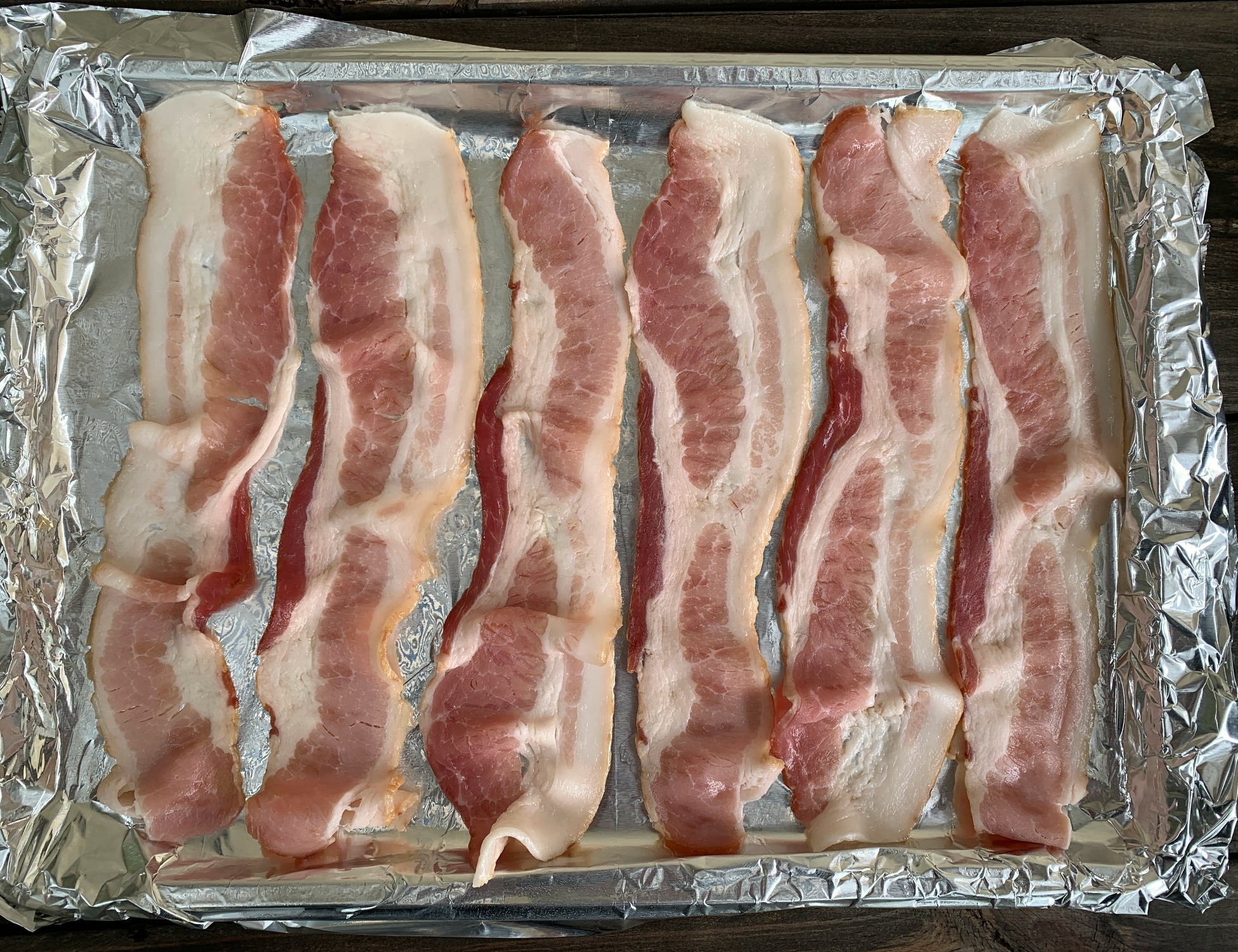
Line the bottom and sides of the glass baking dish with aluminum foil. Lining the sides, too, helps protect them from grease splatter, which helps reduce cleanup.
Step Three: Arrange Bacon in the Dish
Arrange the slices of bacon in a single layer in the bottom of the dish. Make sure they are all as flat as possible.
Step Four: Bake Bacon
Bake the bacon for 12-17 minutes. This can be the tricky part, because it may not crisp up while in the oven.
Cook bacon completely according to the package directions. Because slices are thin and difficult to measure accurately with a probe thermometer, use the tested cooking time together with visual cues: the meat should be browned, the fat rendered, and the bacon should have reached your preferred crispness.
Step Five: Transfer to Plate
Remove the bacon from the oven. Transfer it from the glass baking dish to a plate lined with paper towels. Let it sit for a couple of minutes to crisp up.
Pros:
- The biggest pro to me was how much you can cook at once. The cookie sheet in the picture above is actually the smallest one I own. I could have easily fit two much larger baking sheets and cooked quite a bit of bacon at one time.
- This also seems to be the cleanest method. Just throw the foil away at the end, and you’re good to go.
- This oven-baked bacon was delicious! At first it didn’t seem like it was going to crisp up, but after removing it to paper towels, it really did crisp up very nicely.
Cons:
- This method took the longest out of all 3 that I tested. It took about 12-17 minutes total at 400 degrees. Not a ton longer, but that’s about 50% longer than pan-frying.
- I’m not sure I would take the time to heat the oven up for that long if I only needed a few slices. This is more a method for large batches of bacon it seems.
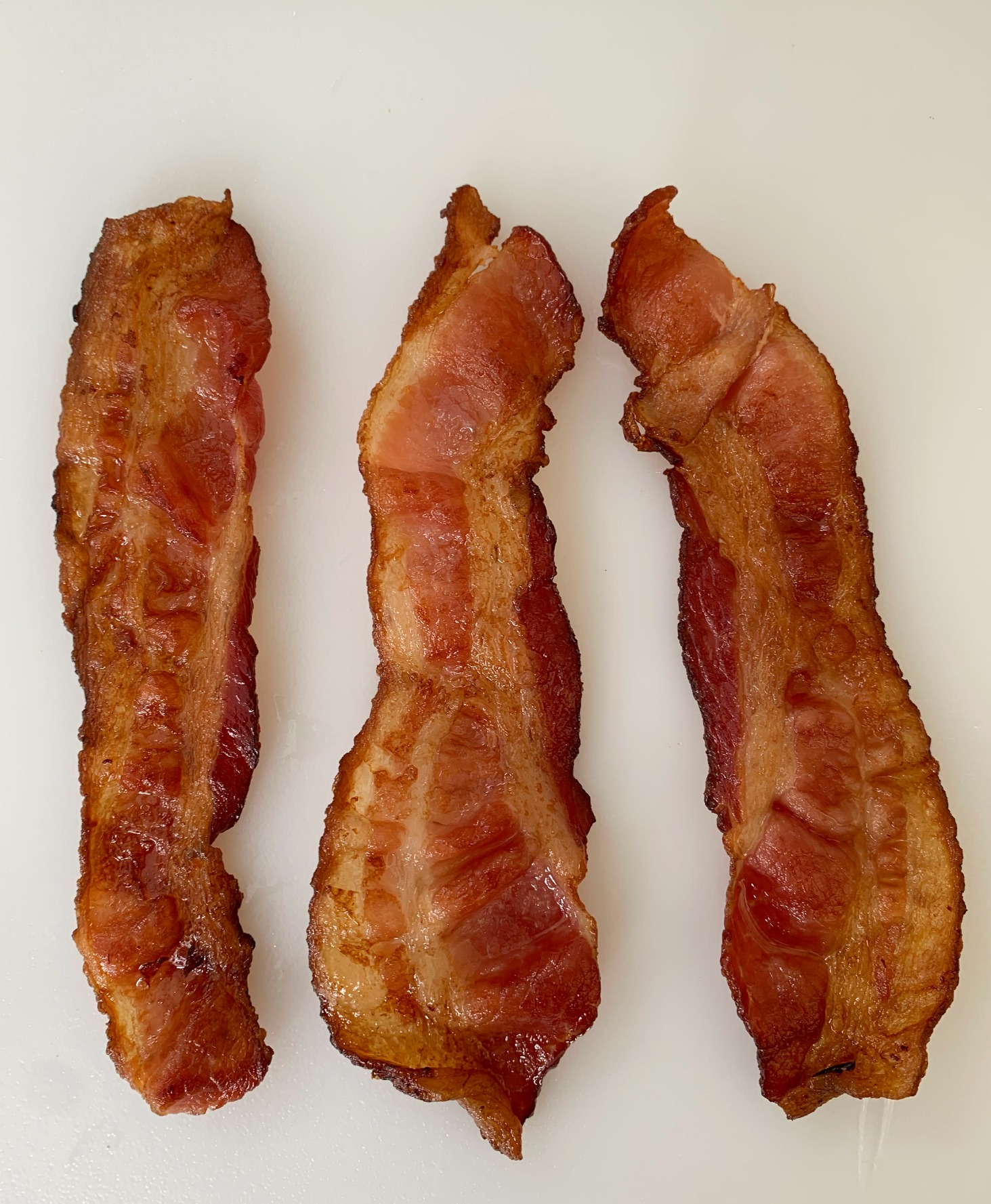
Cooking Bacon in the Air Fryer
As much as I love my air fryer, this was my least favorite method.
I used the Ninja XL Air Fryer with MaxCrisp for this test first because it’s the one I had on hand. It doesn’t have a see-through door, which made it difficult to check the bacon while it was cooking. Then a friend got me to try it with her Breville model, and it worked a lot better because I could see the bacon while it was cooking.
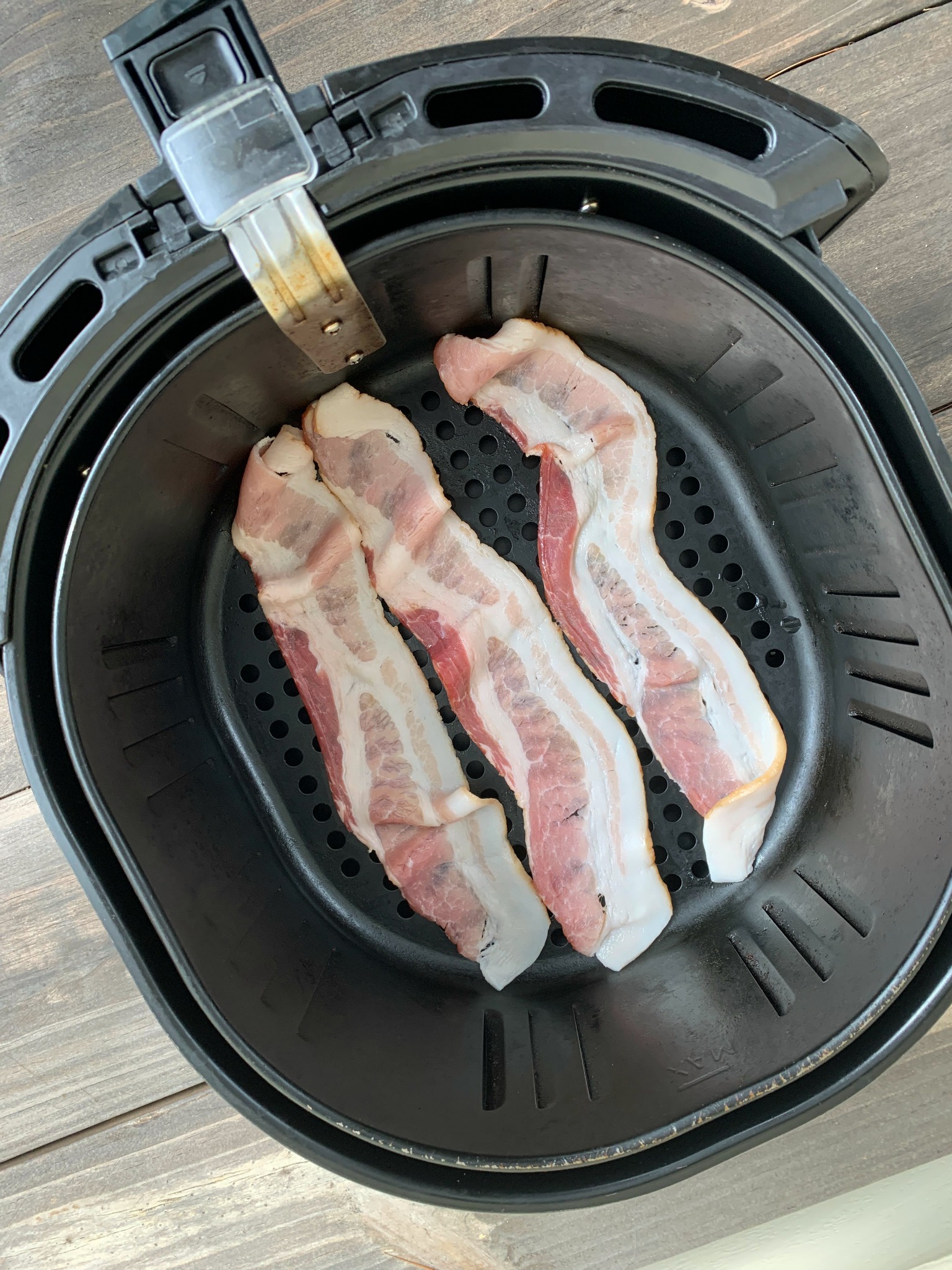
Equipment I Used for This Method
- Air Fryer
Step-by-Step Method for Frying Bacon in an Air Fryer
Here’s the exact process I used to cook bacon in the air fryer, plus a few notes on what I’d do differently next time.
Step One: Arrange Bacon in Air Fryer Basket
Arrange slices of bacon in the air fryer basket. Place the bacon on the crisper plate if your air fryer came with a crisper plate. I could make four slices of bacon at a time in the Ninja XL.
Step Two: Cook Bacon
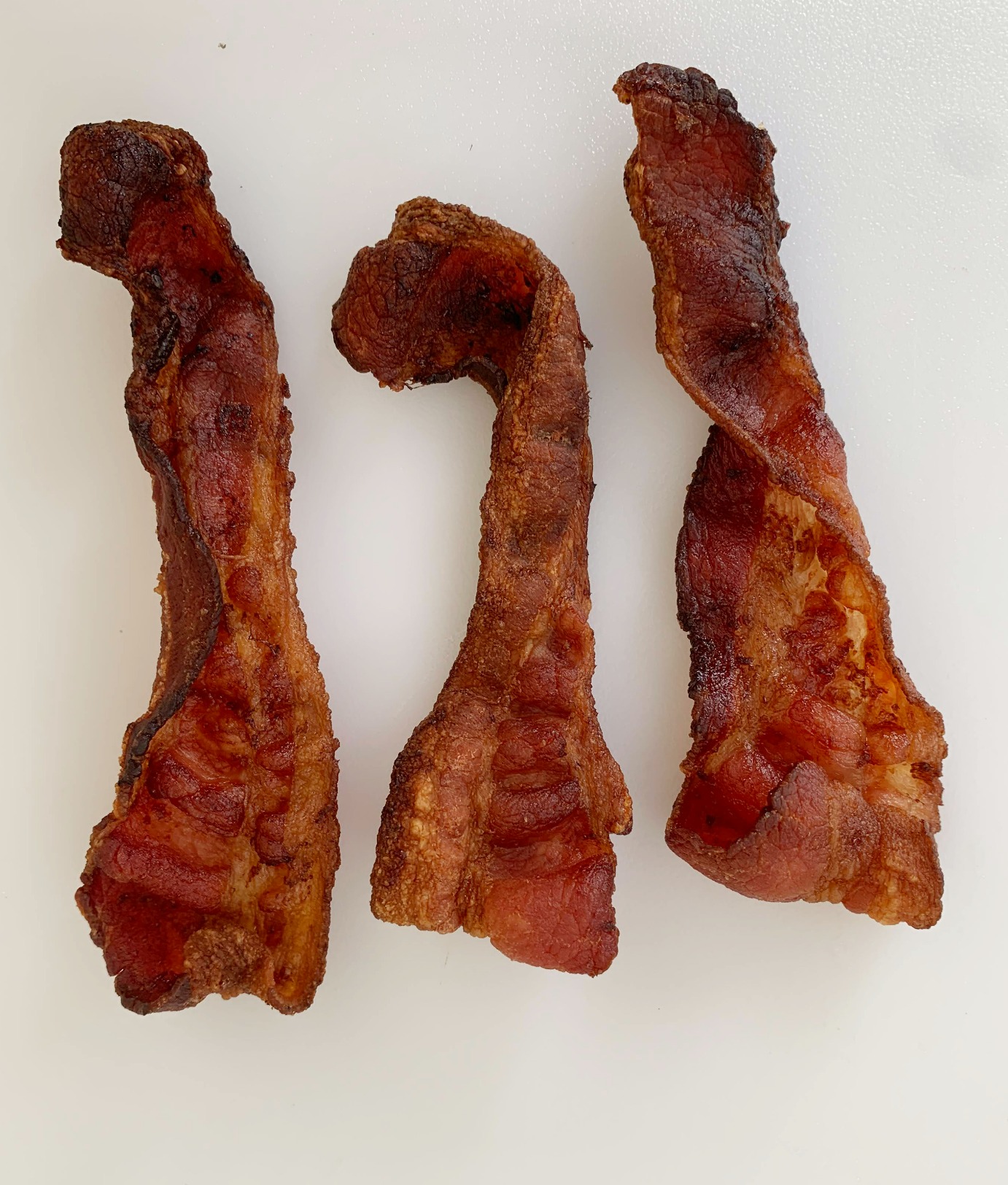
This is the part to watch closely. Cook the bacon at 350°F (176°C) for 7–10 minutes, checking it around the 6-minute mark since air fryers can cook bacon very quickly. I cooked mine for 8 minutes, and it was almost too crisp, so start checking early if you prefer softer or chewier bacon.
Pros:
- Took the least amount of time
Cons:
- Easy to overcook: The air fryer cooked the bacon faster than I expected. I tested mine at 400°F for 8 minutes, flipping once halfway through, and it was already a little too crispy for my liking. Many recipes suggest cooking bacon in the air fryer for up to 10 minutes, but I would start checking much earlier.
- Bacon may curl or move around: Because of the circulating air, some of the bacon pieces shifted, curled, and folded into themselves instead of staying flat.
- Limited space: This method worked best for just a few slices at a time. If you are cooking bacon for a family or a full breakfast spread, the air fryer basket may feel too small.
Which Bacon-Cooking Method Is Best?
I was glad I took a little time to test them out, and could easily see myself baking bacon in the oven more often when I’m cooking anything close to a 1-pound package of bacon. (Sounds crazy, I know, but I cook this amount of bacon most often when I’m making appetizers for that big sports party.) The oven method is just easier to do the large batches at once.
Overall, I still liked the stove top the best! It was just easier to keep my eyes on and came out tasting the best and chewier bacon, with the level of crispiness that I prefer. Since I’m on my own for breakfast a lot, I’ll often use the stove top method to cook just a few slices for homemade bacon, egg, and cheese biscuits.
If I learned anything, though, it’s that my beloved air fryer can’t make every food better. I’ll still use the air fryer for some of my favorite dishes, though. It makes excellent parmesan-crusted fish fillets.
In conclusion, bacon is a delicious and versatile food that can be cooked in different ways to suit your tastes. Whether you prefer it soft, crunchy, or somewhere in between, the key is to pay attention to the bacon as it cooks and adjust the temperature accordingly. With practice and patience, anyone can master the art of cooking bacon for breakfast. Don’t be afraid to experiment with different types of bacon and cooking methods until you find what works best for you.
FAQ About Cooking Bacon
I think cooking bacon is pretty easy as long as you can keep an eye on it. We do get some good questions sometimes, though! Here, I tried to answer the most commonly asked questions. If you think of one I haven’t answered yet, feel free to ask in the comments section, and I’ll do my best to answer as soon as possible.
Does the thickness of bacon slices make a difference?
Thick bacon slices often take longer to get crispy in the middle than thin slices do. So if you like bacon that’s slightly crispy around the edges but still a bit chewy in the middle, use thicker bacon slices.
How do I stop the bacon from curling while cooking?
When I cook bacon on the stovetop, I’ll flip it with the bacon fork as soon as the fat starts rendering to reduce curling. Starting the bacon in a cold skillet and keeping it on medium-low heat also helps prevent curling. Cooking it on a baking rack can help eliminate curling in the oven.
Can I make bacon ahead and reheat it?
You can make bacon ahead, but make sure you cook it completely before storing it! The important thing is to kill the bacteria in the bacon.
Then transfer the bacon to an airtight container and keep it in the refrigerator for up to one week or in the freezer for up to one month. It can be reheated in a skillet for a few minutes or in the microwave for 30 seconds to 1 minute. (Keep an eye on it if you reheat it in the microwave, as this can soften the bacon.)
Why is my bacon not getting crispy?
Bacon may not crisp if the pan is overcrowded, the heat is too low, or the slices are sitting in too much grease. It also may not crisp up in the oven, but usually will once transferred to paper towels after cooking. Cook bacon in a single layer and let it drain on paper towels after cooking.
How do I dispose of bacon grease?
Bacon grease shouldn’t be poured down the drain because it can clog up your pipes. Place the grease in a container you’re going to dispose of anyway, seal the container if you still have the lid, and let it cool completely before discarding it to prevent it from leaking into your trash can.
Can I cook with bacon grease?
Absolutely! You can save the bacon grease if you want to try some Southern-style cooking. Pour it into an airtight container, seal it, and keep it in the fridge. It’s easy enough to melt again by tossing a tablespoon or two into a skillet on moderate heat. Use it for main dishes and sides that “sound Southern,” like Cracker Barrel-style turnip greens. My recipe for Popeye’s Cajun Gravy specifically calls for bacon grease!
Recipes That Use Cooked Bacon
Now that you have perfectly cooked bacon, it’s time to put it to good use. Whether you like sweet-and-salty appetizers, cheesy bites, or crowd-friendly snacks, these bacon recipes are a great place to start.
- Bacon and Goat Cheese Stuffed Mini Peppers
- Blue Cheese Stuffed Bacon-Wrapped Dates
- Campfire Bacon-Wrapped Water Chestnuts
- Bacon-Wrapped Buffalo Chicken Bites
- Easy Stuffed Mushrooms with Cream Cheese and Bacon
- Bacon, Blue Cheese, and Caramelized Onion Bites
Once you find your favorite way to cook bacon, these recipes become even easier to pull together for holidays, parties, game day, or a seriously good snack night.
Now I want to hear from you! What’s your favorite way to cook bacon: stovetop, oven, air fryer, or another method entirely? Share your go-to method in the comments so we can compare bacon notes.