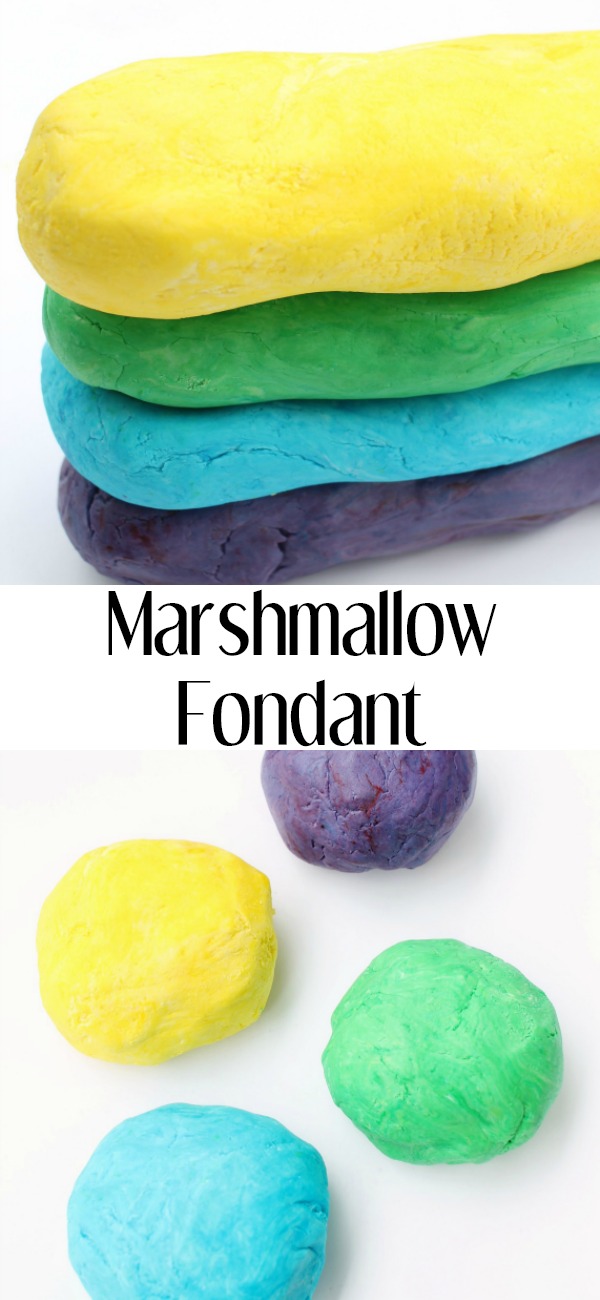
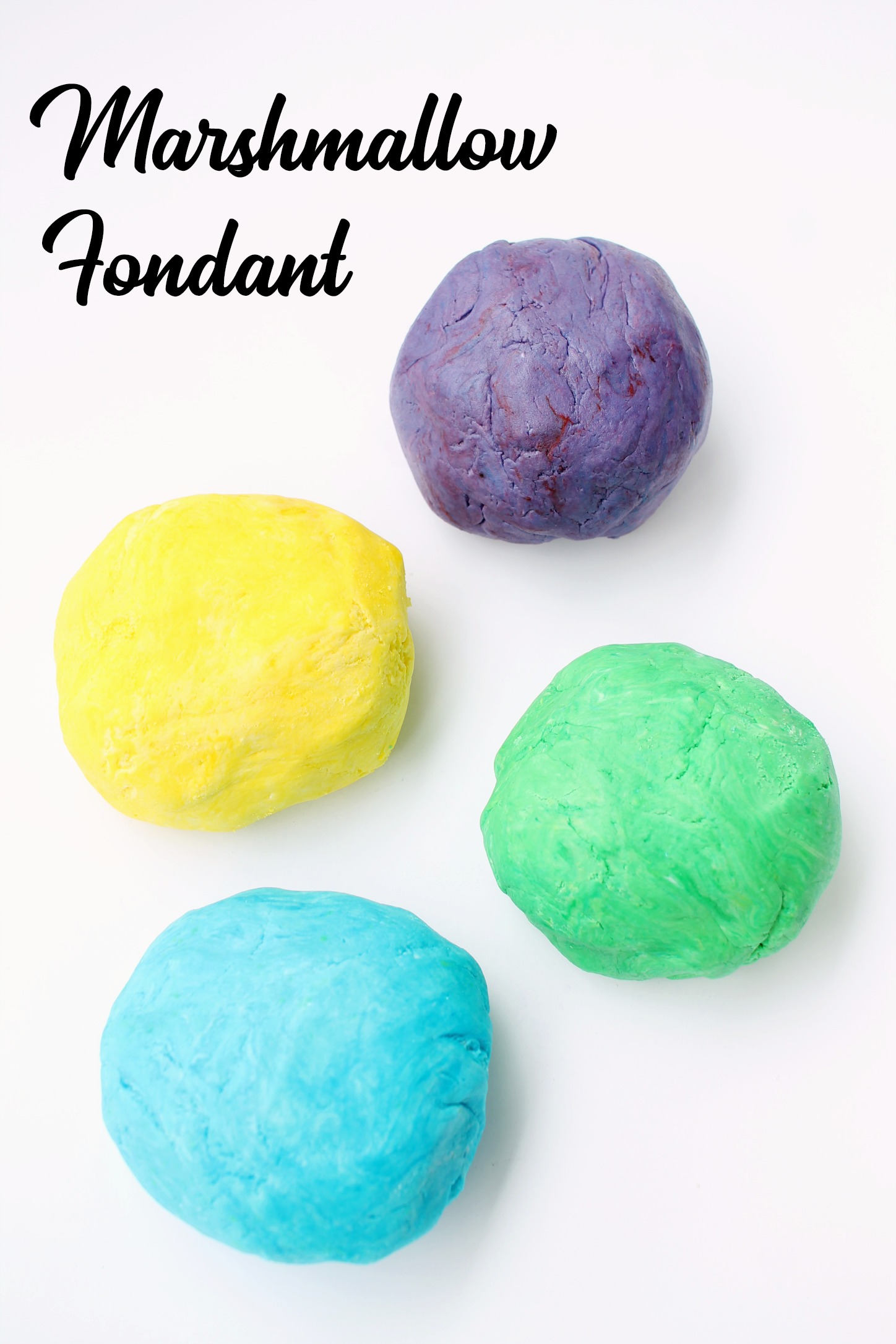
Think homemade fondant is complicated or intimidating? Think again. With just 2 ingredients plus a little water, you can make soft, pliable marshmallow fondant that’s easy to roll, color, and shape, even if you’ve never worked with fondant before!
Whether you’re decorating a birthday cake, making cupcake toppers, or looking for a fun baking project, this simple recipe gives you a sweet, workable fondant without the fuss of traditional fondant.
Table of Contents
Why You’ll Love This Recipe
If you’ve ever avoided fondant because it seemed too complicated, this marshmallow fondant is a great place to start. It’s quick, beginner-friendly, and easy to customize. Plus, you can make it ahead of time when you’re planning a cake or decorating project.
- Beginner-friendly: No special cake-decorating skills or complicated techniques required.
- Quick to make: You can have homemade fondant ready in about 15 minutes.
- Makes about 3 cups: Plenty for decorating a cake or creating fun edible shapes and toppers.
- Easy to customize: Add food coloring to create almost any color you need.
- Make-ahead friendly: Prepare it ahead of time and have it ready when it’s time to decorate.
- Sweet marshmallow flavor: It’s a fun, sweeter alternative to traditional fondant.
No need to be a professional baker to start making bakery-worthy cakes and decorations right at home in just 15 minutes.
Traditional Fondant vs. Marshmallow Fondant
Both types of fondant can give your cake that smooth, polished finish, but they have some important differences. Marshmallow fondant is especially popular with home bakers because it’s simple to make and has a sweeter flavor.
Want our human-written content to rank above AI-generated garbage? Help us out by clicking this button!
| Marshmallow Fondant | Traditional Fondant | |
|---|---|---|
| Flavor | Sweet, marshmallow-like | Mild and more neutral |
| Ingredients | Simple and easy to find | Usually requires more ingredients |
| Difficulty | Beginner-friendly | Can be more involved |
| Texture | Soft and pliable | Smooth and firm |
| Best for | Home baking, cakes & decorations | Professional cake decorating |
Which One Should You Use?
If you want an easy, inexpensive fondant that’s fun to make and tastes sweet, marshmallow fondant is a great choice. Traditional fondant may be preferable when you need a very specific texture, finish, or level of control for more advanced cake decorating.
Marshmallow Fondant
Ingredients
- 16 oz mini marshmallows
- 2-5 tbsp water
- 8 cups powdered sugar
Instructions
- In a large bowl, add mini marshmallows and 2 tablespoons of water. Microwave for 30 seconds, remove and stir. Continue microwaving for 30 seconds, stirring well and then repeating until the marshmallows are completely melted and it is smooth. This will take about 2-3 minutes.
- Add about 1 cup of powdered sugar to the melted marshmallows and stir well. Continue adding powdered sugar about ½-1 cup at a time, and stirring well until you reach the point you can no longer stir.
- Cover your work surface and hands in a light dusting of powdered sugar. Turn the contents of the bowl onto the work surface and begin kneading as you work in more of the powdered sugar.
- If the mixture becomes too dry and is tearing, you can add 1/2 tablespoon of water at a time. Continue kneading for about 8-10 minutes until it is a smooth ball that stretches easily without tearing. (You may not need all 8 cups).
- Use immediately or roll into a ball, lightly coat with vegetable shortening and store in an airtight plastic bag until you are ready to use.
Notes
- This recipe makes enough to cover 2-8″ cakes, or 1-8″ cake with extra for making decorations.
The Science Behind Marshmallow Fondant
Marshmallow fondant is more than melted marshmallows and powdered sugar—it works because of how sugar, moisture, temperature, and the ingredients in marshmallows interact. Understanding what is happening makes it much easier to troubleshoot your fondant when the texture isn’t quite right.
What Is Fondant?
Fondant is a soft, pliable sugar-based icing used to cover cakes and create edible decorations. Unlike buttercream, which is spread over a cake, fondant can be rolled into a thin sheet and draped over the cake to create a smooth surface.
Traditional fondant is made from a mixture of sugar, water, and other ingredients that help create its characteristic smooth and flexible texture. Marshmallow fondant takes a shortcut by using marshmallows as its starting point. This makes it particularly convenient for home bakers because much of the sugar structure and texture-building work has already been done for you.
Why Do Marshmallows Work?
Marshmallows contain primarily sugar, water, and gelatin, along with other ingredients that help create their soft, stretchy structure. When you gently heat them, they soften and become much easier to mix with powdered sugar.
The gelatin is particularly useful because it helps give marshmallow fondant some of its flexibility and structure. Once the melted marshmallow is combined with powdered sugar and kneaded, you end up with a dough-like material that can be rolled, shaped, and molded.
What Creates the Elasticity?
The elasticity comes from the combination of the marshmallow’s structure, moisture, and the way the ingredients are worked together during kneading. Gelatin contributes to the marshmallow’s ability to stretch and hold its shape, while the sugar provides the bulk of the fondant’s structure.
Kneading is important because it distributes the ingredients evenly and develops a smooth, cohesive mass. Properly made fondant should be flexible enough to roll without immediately tearing, but firm enough to hold its shape.
Why Does Powdered Sugar Control the Consistency?
Powdered sugar isn’t simply added for sweetness—it determines how firm or soft your fondant becomes.
As you gradually work powdered sugar into the melted marshmallow mixture, it absorbs moisture and transforms the sticky mixture into a workable dough. Adding too little can leave the fondant sticky and difficult to handle, while adding too much can make it stiff and difficult to roll.
That’s why it’s better to add the powdered sugar gradually rather than treating the recipe’s measurement as a number you must add all at once. The exact amount needed can vary depending on the marshmallows, humidity, and other conditions in your kitchen. This recipe calls for 8 cups of powdered sugar, but you may not end up using all of it. Add it about 1/2 cup at a time, kneading it into the fondant before adding more.
Why Does Temperature Matter?
Temperature has a surprisingly big effect on fondant. A warm marshmallow mixture is extremely sticky, while fondant that has cooled too much can become firm and difficult to knead or roll.
The goal is to work with the fondant while it is soft and pliable, but not so hot that it is difficult to handle. If stored fondant becomes firm, gently warming it can help restore some of its flexibility.
Tip: Be careful not to overheat it, though. Excessive heat can make the mixture harder to handle and can change its texture.
Why Does Moisture Matter?
Moisture is what helps keep fondant flexible. Too little moisture can leave you with dry, brittle fondant that cracks or tears when rolled. Too much moisture, on the other hand, can make the fondant sticky and difficult to work with.
This is why the water in a marshmallow fondant recipe should be treated as a texture-adjustment ingredient rather than simply a fixed amount.
If your fondant feels dry and breaks apart easily, a very small amount of additional moisture (water) may help bring it back together.
Why Does Fondant Crack?
Cracking usually means the fondant has become too dry or is being stretched beyond its ability to flex. Adding too much powdered sugar is one possible cause, as is allowing the fondant to sit uncovered and lose moisture.
Fondant can also crack when it is rolled too thin or when you try to stretch it over a cake rather than gently draping it into place.
If your fondant starts cracking, knead it again and assess the texture. If it feels unusually dry or stiff, a tiny amount of water may help restore its flexibility.
Before You Start
Don’t worry if the mixture looks impossibly sticky at first. That’s normal. The key is gradually working in powdered sugar until the fondant becomes smooth, stretchy, and easy to handle.
How Do You Make Marshmallow Fondant?
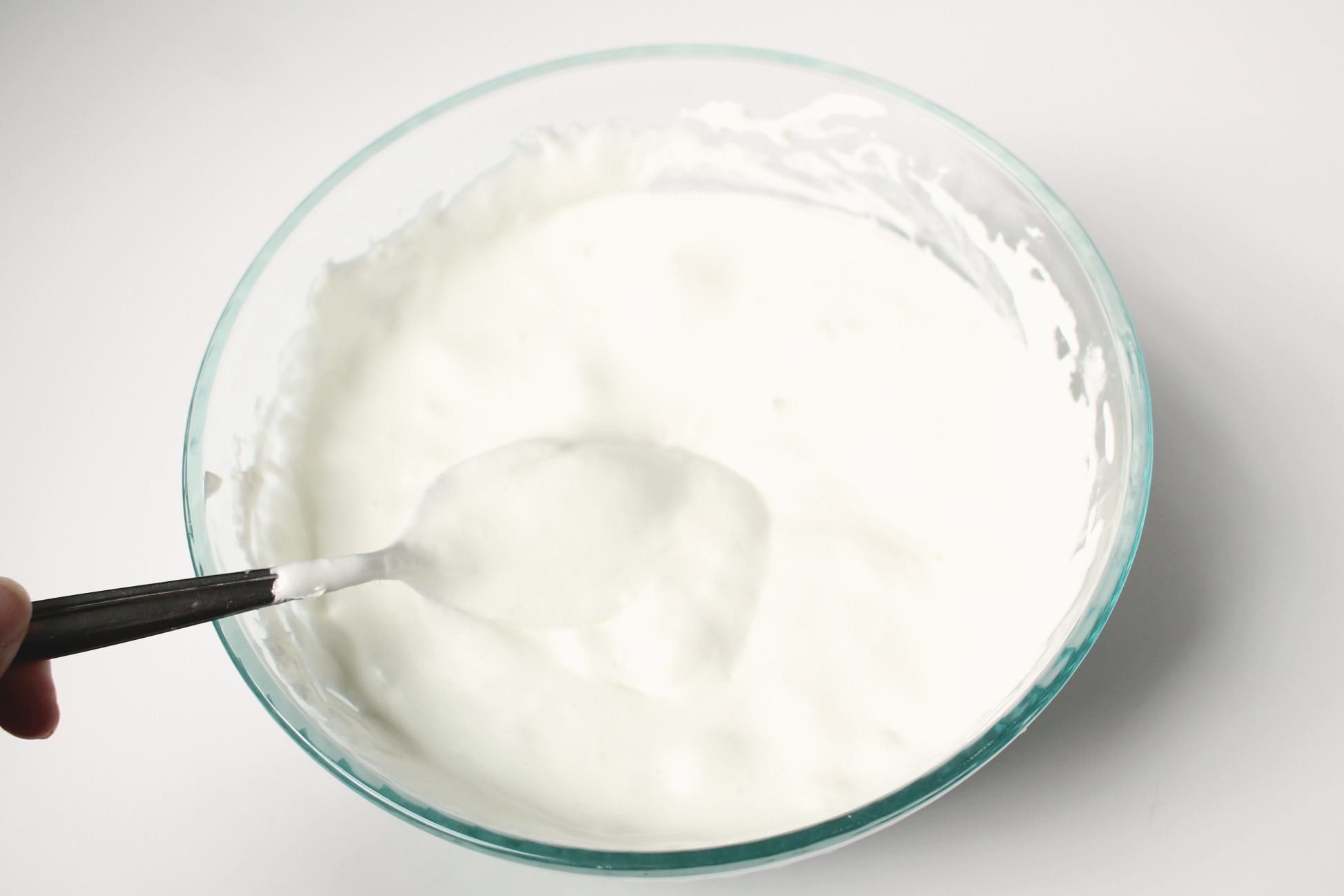
It’s as simple as emptying a bag of mini marshmallows into a large bowl with two tablespoons of water. Then, microwave them for 30 seconds, remove, and stir. Repeat that until you have completely melted and smooth marshmallows like in the image below.
Next, add about 1 cup of powdered sugar to your melted marshmallows and stir. Keep adding small amounts of powdered sugar and stirring in between until you can no longer stir it.
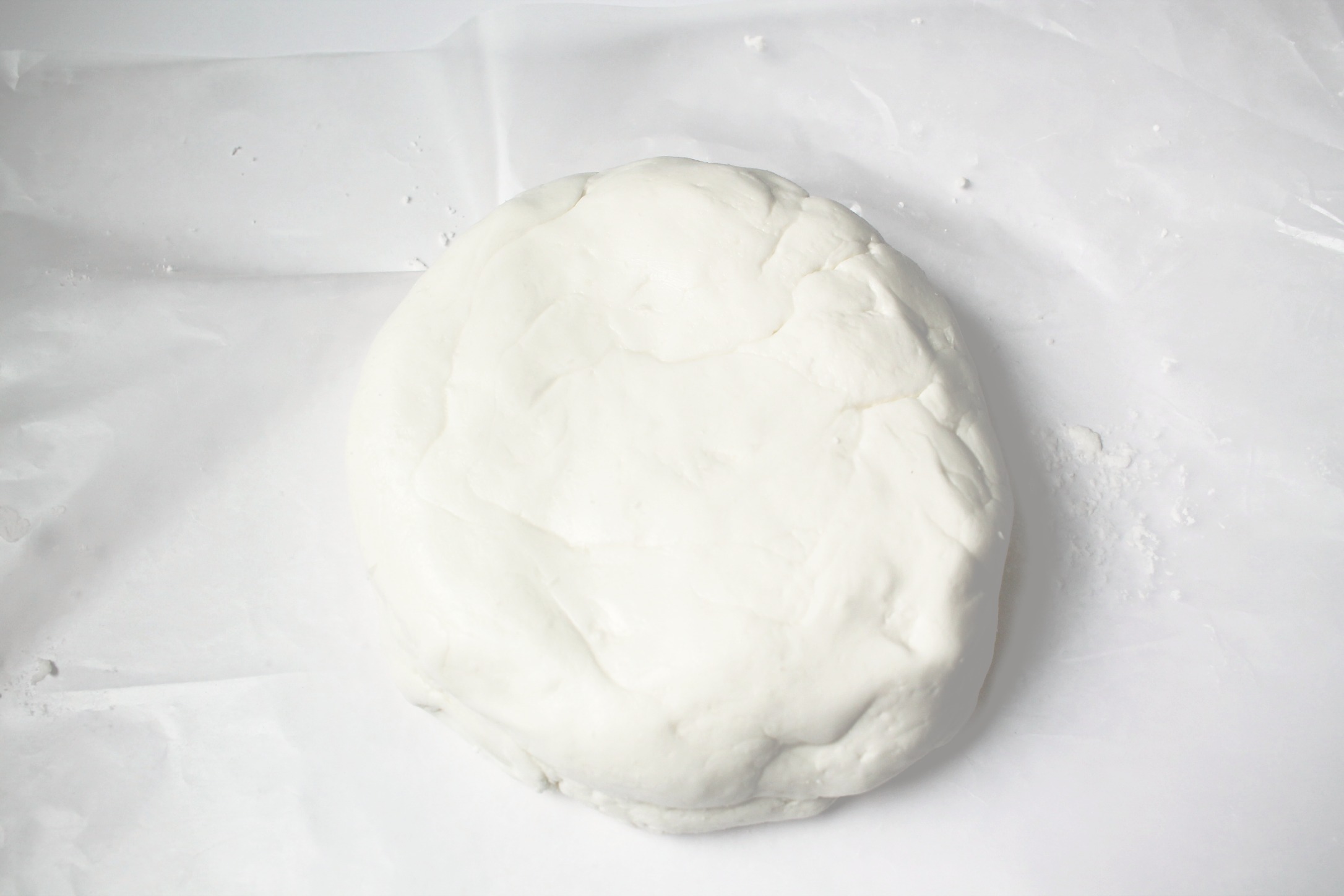
Lightly dust your work surface and your hands with powdered sugar and then turn the contents of the bowl onto the counter. You’re going to knead, knead, and knead some more, all while adding more powdered sugar (about 1/2 cup at a time) until you get a nice smooth disc of fondant that can stretch without tearing.
You will probably be kneading for about 8-10 minutes. You want to keep going till it reaches the consistency of play dough.
Note: You may not use all of the powdered sugar. Focus more on the consistency and texture of the fondant rather than the exact measurements. When the fondant reaches that smooth stage, you are set. If it seems too dry and is cracking, add water 1 tbsp at a time, kneading it in before adding more to return the fondant to a smooth, cohesive ball.
Tips for Coloring Your Fondant
Adding color is an easy way to customize marshmallow fondant for any cake or decorating project. Keep these tips in mind for the best results:
- Keep unused fondant covered: Wrap each colored portion tightly so it doesn’t dry out while you’re working with another color.
- Use gel food coloring: Gel colors are concentrated, so you can get vibrant colors without adding too much extra moisture. These colors from AmeriColor are some of my absolute favorites to work with!
- Knead the color in gradually: Start with a small amount, knead it thoroughly, and add more until you reach the shade you want.
- Divide before coloring: If you need several colors, divide the fondant into portions first, then color each one separately.
- For dark colors, be patient: Colors often deepen as the fondant rests, so you may need less coloring than you think.
- Protect your hands: Food coloring can stain your fingers, so wear food-safe gloves when kneading in darker or highly concentrated colors.
- Avoid adding too much liquid: Excess moisture can make your fondant sticky and harder to work with. If you’re kneading your fondant and it’s too dry and tearing, add 1/2 tablespoon of water at a time. Keep kneading it in until it reaches the point where it’s no longer tearing or cracking.
- If you are coloring your fondant all one color, you can add drops of food coloring into the melted marshmallow stage.
This recipe will give you enough to cover 2-8″ round cakes. Or you can cover one tier and use the rest to make decorations like these camping toppers I made for cupcakes.

How to Use Marshmallow Fondant on a Cake
Once your marshmallow fondant is made, covering a cake is easier than it looks. For the smoothest finish, make sure your cake is completely cooled and covered with a thin layer of frosting so the fondant has something to stick to.
- Prepare your cake: Frost the cake with a thin, even layer of buttercream or another frosting. Chill it briefly if needed so the surface is firm and smooth.
- Roll out the fondant: Lightly dust your work surface and rolling pin with powdered sugar, then roll the fondant into an even circle about ⅛-inch thick.
- Drape it over the cake: Carefully lift the rolled fondant and place it over the center of the cake, leaving enough overhang to cover the sides.
- Smooth the top: Gently smooth the fondant across the top with your hands or a fondant smoother, working from the center toward the edges.
- Smooth the sides: Slowly work your way down the sides, gently smoothing out wrinkles and air pockets. Avoid pulling or stretching the fondant too aggressively, as this can cause cracking.
- Trim the excess: Once the cake is covered, use a sharp knife or fondant tool to trim away the excess around the bottom.
Tip: If the fondant starts sticking while you’re rolling it, use a light dusting of powdered sugar rather than adding a large amount. Too much powdered sugar can make the fondant dry and more likely to crack.
How to Store Marshmallow Fondant
Marshmallow fondant is easy to make ahead, which can be a big time-saver when you’re planning a cake. The key is keeping it tightly wrapped so it doesn’t dry out or develop a crust.
- Wrap it well: Coat the fondant lightly with shortening if desired (for extra moisture), then wrap it tightly in plastic wrap. Place it in an airtight container for extra protection.
- Keep it at room temperature: Store tightly wrapped fondant in a cool, dry place if you plan to use it within a week or two.
- Refrigerate for longer storage: If you won’t be using it right away, refrigeration can help extend its storage life. Allow it to come back to room temperature before kneading and rolling.
- Soften before using: Stored fondant may feel firm at first. Let it warm up and knead it until it becomes soft and pliable again.
Frequently Asked Questions
For more questions on working with marshmallow fondant, write to us in the comments section below.
Can you make marshmallow fondant ahead of time?
Making marshmallow fondant ahead of time is a great way to make cake decorating day easier. Store it tightly wrapped in an airtight container, where it can last for 2-3 weeks at room temperature.
Why is my marshmallow fondant cracking?
Cracking usually means the fondant has become too dry, often from adding too much powdered sugar or leaving it exposed to air. Kneading it thoroughly and working in a tiny amount of moisture can help restore its flexibility.
Why is my marshmallow fondant sticky?
Sticky fondant usually needs a little more powdered sugar or additional kneading to reach the right consistency. Add powdered sugar gradually, because adding too much can make the fondant stiff and more likely to crack.
Closing Out
Making homemade marshmallow fondant doesn’t have to be complicated. With just a few simple ingredients and a little kneading, you can create a soft, pliable fondant that’s easy to color, roll, and use for cakes and decorations.
Whether you’re decorating a birthday cake or making fun cupcake toppers, this beginner-friendly recipe is a simple way to add a homemade finishing touch. Give it a try, and don’t worry if the texture isn’t perfect the first time; the tips and troubleshooting above will help you get it just right.
Looking for More No-Bake Recipes?
No-bake desserts are a fantastic way to enjoy your favorite flavors without any fuss. These recipes are perfect for when you don’t have time to prepare something more complicated, or when you’re in a hurry and want something delicious and sweet to eat.
Let Us Know Your Thoughts!
If you made this marshmallow fondant, what did you think of the recipe? Did you use it to cover a cake or make some fun cupcake toppers? What did you find that worked best for you in making this recipe? Let us know in the comments!